

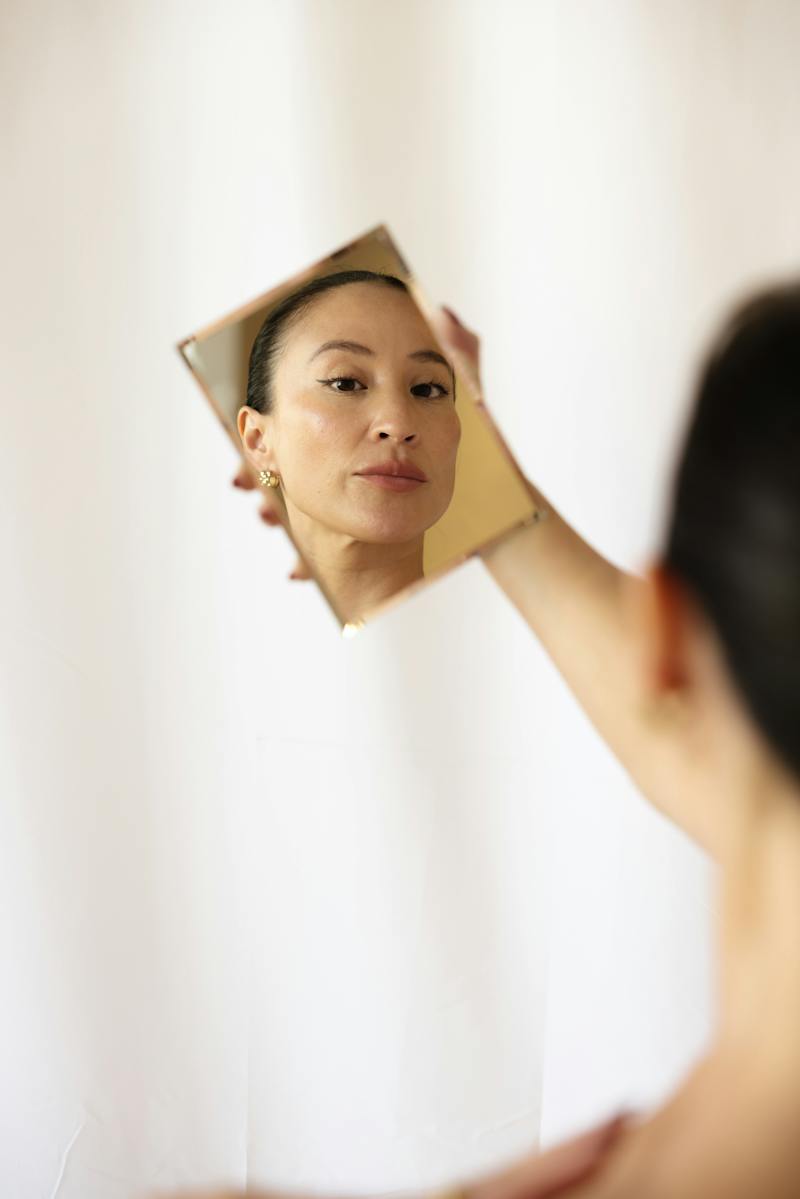
If you're lean and fit and your face is paying for it, you already know the problem before any surgeon names it. Runners, lifters, cyclists, anyone who keeps body fat low year-round: the temples hollow first, then the midface flattens, and suddenly a body you worked hard for comes with a face that reads five years older and slightly unwell. There's even a name for it people whisper on running forums. I see this patient every week at Fulcrum, and the two tools I reach for most are AlloClae, a structural adipose filler, and Radiesse, a calcium-based biostimulator. They are not interchangeable, and the difference matters more in your face than in almost anyone else's. Here's how I actually choose.
Why athletic faces are a special case
Two reasons. First, the obvious one: facial fat loss is the price of low body fat, and the temples and midface are where the bill arrives. Second, the one that changes the treatment math: the classic fix for significant facial volume loss is fat grafting, which requires harvesting your own fat, and you're the exact patient who doesn't have donor fat to spare. For years that left lean patients choosing between synthetic fillers or nothing.
AlloClae changes that equation. It's donated human adipose tissue, processed to preserve the natural 3D honeycomb structure of fat and its extracellular matrix (the collagens, proteins, and growth factors that give fat its softness) while the cells themselves are non-living and the immunogenic components are removed. In plain terms: the architecture of fat, in a syringe, no liposuction required. Your body-fat percentage becomes irrelevant to whether you can have a fat-based result. And over the months after treatment, your own cells and blood vessels move into that matrix and remodel it, so what starts as donor architecture becomes your tissue.
Radiesse is a different tool doing a different job: calcium hydroxylapatite particles that add volume immediately and stimulate your own collagen for durability. It's a genuinely good product. It's also, structurally, firmer, and that's the entire crux of this comparison.
The feel question, because in temples it's everything
The temple is some of the thinnest, least-padded real estate on the face, and on an athletic patient there's even less cushion over it. Whatever goes in there, you will eventually feel, and in the wrong light, see. Firm product under thin skin telegraphs. That's not a knock on Radiesse; in areas with more soft-tissue coverage, its structure is an asset. It's a statement about anatomy: lean temples and midface reward soft, and AlloClae is fat behaving like fat: it compresses, it moves with animation, and once it's remodeled it feels like you because increasingly it is.
So my honest default for hollow temples and midface in a lean patient is AlloClae, placed with a fine cannula in layers, under local, in a single office visit. Where I still reach for Radiesse in these same patients: areas that want structural support rather than softness, deeper placement along bone where its firmness disappears into the foundation, and patients who prioritize maximum time between treatments over the softest possible feel. Plenty of my patients get both, doing different jobs in different planes. That's not upselling; that's using each tool where it's actually good.
Recovery, honestly
Both are office procedures. Expect some swelling and possibly a bruise, settled within days; you can be back at your desk the same day and back to hard training within a few days. One athlete-specific note worth knowing: intense training spikes circulation and can prolong swelling and bruising slightly in the first day or two, so if you can stand to take a rest day after injection, your face will thank you. AlloClae's result is visible immediately and refines as the matrix integrates over the following weeks. Radiesse is also immediate, with collagen building behind it over months.
How long each lasts
AlloClae typically lasts six to eighteen months, depending on metabolism and placement, with integrated tissue persisting beyond that in many patients. Radiesse runs twelve to eighteen months, with its collagen scaffolding carrying volume after the particles themselves are gone. If longevity is your only metric, Radiesse wins on paper. If feel is your metric, and in the temple it should be, the calculus flips. I tell it to athletic patients plainly: AlloClae buys the softest, most natural integration and accepts periodic maintenance; Radiesse buys duration and accepts firmness that your fingertips may find. Neither answer is wrong. They're answers to different questions.
What it costs
AlloClae is priced by volume: $4,000 for 12.5cc and $5,500 for 25cc. Temple and midface work usually falls in that 12.5–25cc range; the temples alone typically take 1–2cc per side, more like 2–3cc per side if the hollowing is deep, and the midface adds several more, so a 12.5cc vial covers moderate correction, while heavier deficits move you to 25cc.
Radiesse runs $650–$900 per syringe in most U.S. markets (national range is roughly $600–$1,200), and this area is rarely a one-syringe job. Temples alone commonly take 1–2 syringes per side, and adding midface support usually puts a full session at 2–4 syringes, call it $1,300 to $3,600 for a comparable result that needs repeating every 12–18 months.
Exact numbers come from your face, not a menu. Your consulation will provide an exact quote
If your face has been the tradeoff
Come talk to me. Fulcrum Aesthetics & Surgery, 1457 W. Belmont in Chicago's Lakeview neighborhood. We'll look at your anatomy honestly, including with ultrasound when planning warrants it, and you'll leave knowing exactly which tool fits your face, or that you don't need as much as the mirror has been telling you. You did the work to be lean. Your face shouldn't have to pay for it.
FAQ
Why do runners and athletes get hollow temples? Low body fat means low facial fat, and the temples and midface lose volume first. The leaner and more aerobically trained you are, the earlier and more visibly it shows, independent of age.
Can I get fat transfer to my face if I'm very lean? Traditional facial fat grafting requires harvesting your own fat, which very lean patients often lack. AlloClae is a donor-derived structural adipose filler that provides fat-based volume without any harvest, making body-fat percentage irrelevant to candidacy.
Is AlloClae or Radiesse better for temples? In thin-skinned, low-padding areas like the temples of lean patients, AlloClae's soft, fat-based integration usually feels and looks more natural, while Radiesse's firmer structure suits deeper support along bone or areas with more coverage. Many treatment plans use each where it performs best.
How long does temple filler last? AlloClae results are commonly maintained 12 to 18 months, and some patients hold volume for two to three years as the matrix integrates and your own cells populate it. Radiesse lasts 12 to 18 months in the temples, a low-movement area where it tends to outperform its lifespan elsewhere on the face, with collagen stimulation from the calcium hydroxylapatite microspheres extending the effect past the point the gel carrier itself has dissolved. Longevity varies with metabolism and placement.
Does temple filler hurt, and what's the downtime? Both treatments are done in-office under local anesthesia with a fine cannula. Expect possible mild swelling or bruising for a few days; most patients return to normal activity within 24 to 48 hours.
Disclaimer: This information is educational and doesn't replace an in-person consultation. Dr. David Hill is a fellowship-trained plastic surgeon and Medical Director of Fulcrum Aesthetics & Surgery in Chicago. Outcomes, risks, and candidacy vary from patient to patient.